Services · freight
IBC tote freight and delivery
An empty tote is mostly air, which makes it expensive to move badly and much cheaper to move well. Partner suppliers in our network can arrange delivery and pickup; this page covers the freight basics so a quote makes sense.
Request a freight quote
Give the destination ZIP code, the quantity and whether there is a loading dock or a liftgate is needed.
Freight modes at a glance
| Mode | Typical quantity | Notes |
|---|---|---|
| LTL (less than truckload) | 1–4 totes | Highest cost per unit; totes are light and bulky |
| Partial truckload | Around 5–18 totes | Often the biggest saving for mid-size orders |
| Full truckload | Around 40 totes, more if double-stacked empty | Lowest cost per unit |
| Customer pickup | Any | Where a partner supplier offers it |
Common extra charges (accessorials) include liftgate, residential or limited access, inside delivery and redelivery. Ask for them to be included in the quote. Pricing is by quote from partner suppliers.
The loading rules that decide the bill
- Empty totes double-stack; filled ones usually do not. Two high is common for empties with sound cages. Units with damaged cages are generally single-stacked.
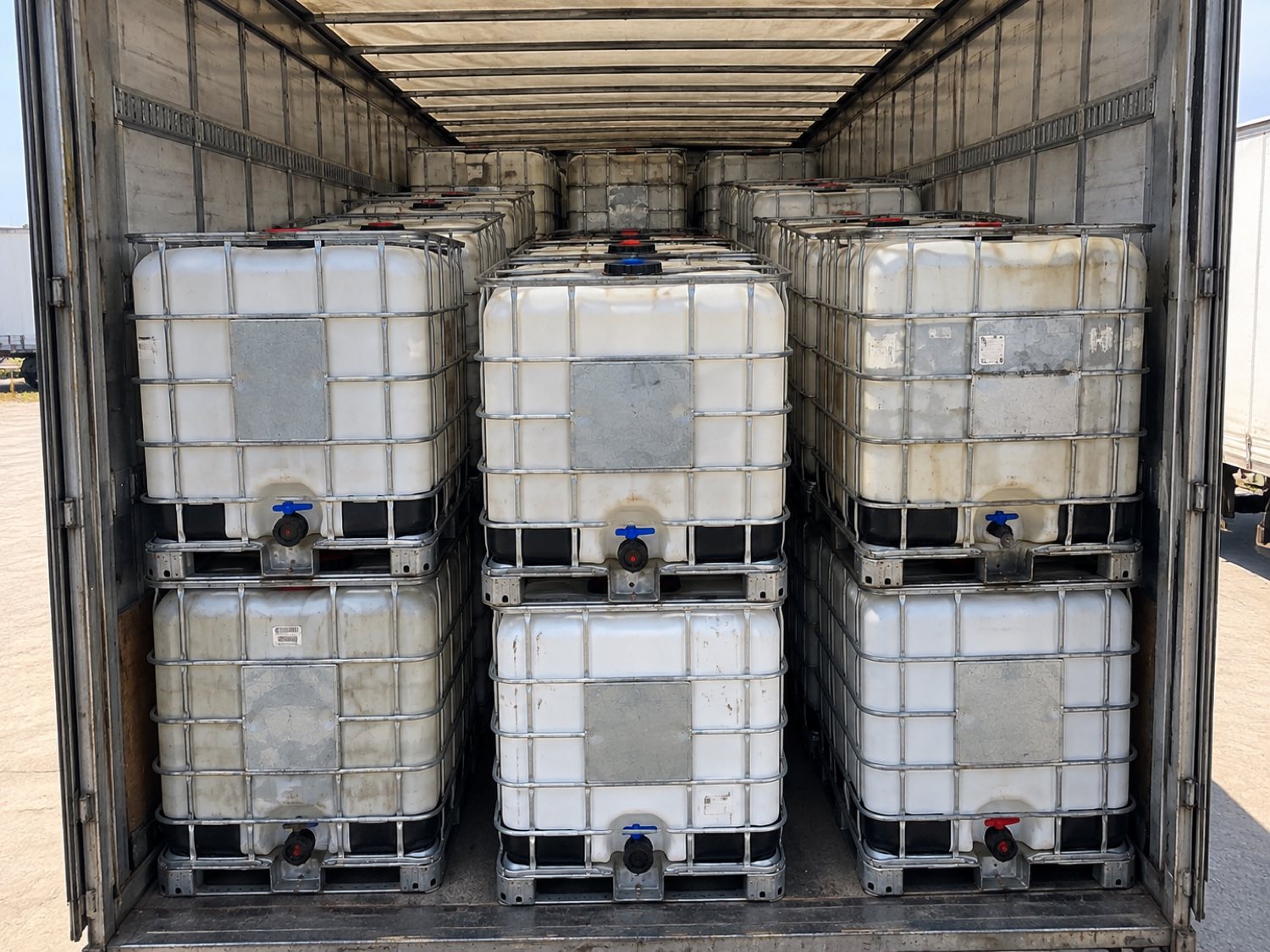
- About 40 single, a few more double. A 53-foot trailer typically takes about 40 units on the floor, a few more when empties are double-stacked and the cages allow.
- Freight class is about density, not value. An empty tote is light and bulky, which is why LTL on a single unit feels expensive. Consolidation is the main answer.
- No dock means a liftgate. A 275 gallon tote typically weighs well over 100 lb empty and cannot be safely manhandled off a trailer bed. Say so in the request.
- Return legs matter. If a truck is delivering to you anyway, collecting empties on the same trip is generally cheaper than a separate pickup.
What to have ready
A clear, level area a forklift or pallet jack can reach; someone authorised to sign; and a straight answer about dock height. These three prevent most failed deliveries.
From request to delivery
- 01
Destination and access
ZIP code, dock or no dock, forklift or no forklift, and any appointment requirements.
- 02
The request goes to partner suppliers
We pass it to partner suppliers in our network who can arrange freight for that lane.
- 03
Mode selection
The partner supplier suggests LTL, partial or full truckload. Sometimes waiting to consolidate is the better option.
- 04
Booking and paperwork
The partner supplier or carrier issues a bill of lading and a delivery window.
- 05
Delivery and return leg
If you have empties, ask whether the same truck can take them.
Distance matters
Reusing a tote avoids manufacturing a new one, but long freight moves eat into that benefit. Where possible, a partner supplier closer to the destination generally makes more sense than a long-distance shipment.
See the reuse case and coverage.
Questions people actually ask
How many IBC totes fit on a 53-foot trailer?
Typically about 40 floor-loaded 275 gallon totes, and a few more when empties with sound cages are double-stacked.
Can totes be delivered without a loading dock?
Generally yes, with a liftgate and enough clear space to work. Mention it in the request so it is included in the quote.
Can totes go to Alaska, Hawaii or outside the continental US?
That depends on partner suppliers. Port drayage and customs paperwork can dominate the cost on those moves.
Who is liable for transit damage?
Carrier liability under the bill of lading generally applies. Note any damage on the delivery receipt and photograph it before signing.
Common accessorial charges
The extra charges that can appear on tote freight, what triggers them and how to avoid surprises.
| Charge | Triggered by | How to avoid a surprise |
|---|---|---|
| Liftgate service | No dock or forklift at delivery | Mention it in the request |
| Residential / limited access | Home address, narrow street, restricted site | Deliver to a business address if you have one |
| Inside delivery | Driver must move goods past the threshold | Meet the truck with a pallet jack |
| Redelivery | Nobody available at the delivery window | Confirm the appointment |
| Detention | Truck kept waiting at the site | Have someone ready to receive |
| Appointment scheduling | Sites requiring booked delivery slots | Unavoidable if your site requires it |
| Reconsignment | Address changed after dispatch | Confirm the address before booking |
| Storage at terminal | Refused or undeliverable freight | Answer the carrier |
| Fuel surcharge | Applied by most carriers; moves with diesel prices | Ask for a quote that includes it |
| Unloading assistance | Sites requiring third-party unloading | Check your own site rules |
The two that most often catch people are liftgate and residential delivery. Both are predictable if you describe the site in your request. Pricing is by quote from partner suppliers.
Loading patterns, written out
Typical figures for planning a load or checking a quote. Actual counts depend on the totes and the equipment.
53-foot dry van
- 275 gallon, floor-loaded with the 40 in side leading: about 40 units.
- 275 gallon, empty and double-stacked: a few more, when cages are sound.
- 330 gallon: about 40 units floor-loaded; double-stacking is often impractical because of height.
- 550 gallon: forklift only, generally not stacked.
20-foot and 40-foot containers
- Door height generally prevents stacking 275 gallon totes, so containers carry fewer units than a dry van of the same length.
Flatbed
- No roof, so stacking is limited by road-legal height and proper securement.
The rules behind the numbers
- Empty totes with sound cages can double-stack. Damaged cages generally should not.
- Filled totes need engineered securement and are often not stacked in transit.
- A 48 × 40 in tote can be loaded either way round; leading with the 40 in side usually fits more per row.
- Freight class for empty totes is driven by density, which is why a single unit on LTL feels disproportionately expensive.
Freight questions
Can I collect totes myself?
Some partner suppliers allow customer pickup. Bring tie-downs; securing the load is generally the driver’s responsibility.
Can I get a fixed delivery date?
Timing is set by the partner supplier and the carrier. LTL is generally quoted as a window; truckload moves can usually be booked more precisely.
Who insures the freight?
Carrier liability under the bill of lading generally applies, which is limited and not the same as full-value insurance. For high-value loads, ask about declared-value coverage before dispatch.
Can totes be shipped with product in them?
Shipping filled containers, especially dangerous goods, is a different regulatory matter for the shipper. See regulations and check current regulations.
What is the cheapest way to move a handful of totes?
Generally, one consolidated partial truckload rather than several separate LTL shipments. Order together rather than one at a time.
Reading a freight quote, line by line
What each part is, so you can compare two quotes that look different.
Linehaul. The base cost of moving the freight between two points. On LTL it depends on freight class, weight and distance; on truckload it is a rate for the vehicle.
Fuel surcharge. Usually a percentage of linehaul that moves with diesel prices. A quote that leaves it out is not a full delivered price.
Accessorials. Liftgate, residential, inside delivery, appointment, detention, redelivery. Most are predictable if you describe the site in your request.
Freight class. Empty totes are light and bulky, which puts them in a high LTL class. That is why one tote can cost far more per unit to ship than a truckload of them — density, not distance.
Triggers you control. Having a dock, having a forklift, having someone available at the delivery window, and giving the correct address. These four account for most accessorial charges.
What to ask for. A delivered price with expected accessorials listed separately, so you can see what changes if your site details change.
More freight questions
Can I use my own carrier?
Often yes. Say so in your request with the carrier details, and the partner supplier can confirm whether it can load to the carrier’s requirements.
Are orders consolidated with other freight?
On partial truckload moves, often. Sharing a trailer is what brings the cost per unit down.
What happens if a delivery fails?
Usually a redelivery charge. The common causes are nobody available and no equipment to unload, and both are avoidable by confirming the appointment.
Can totes be delivered to a job site?
Generally yes, with a liftgate and a firm, level place to set the units. Describe the ground conditions in your request.
A loaded trailer, tail on
Empty 275 gallon totes are often double-stacked in a trailer; taller totes may not stack.
Reuse first, then recycle.