IBC tote quotes · partner suppliers · United States
The greenest IBC tote on earth is the one that already exists.
Request quotes for used, reconditioned, rebottled and new IBC totes, or for selling, washing, shipping and recycling the totes you have. Partner suppliers in our network quote and fulfill every request.
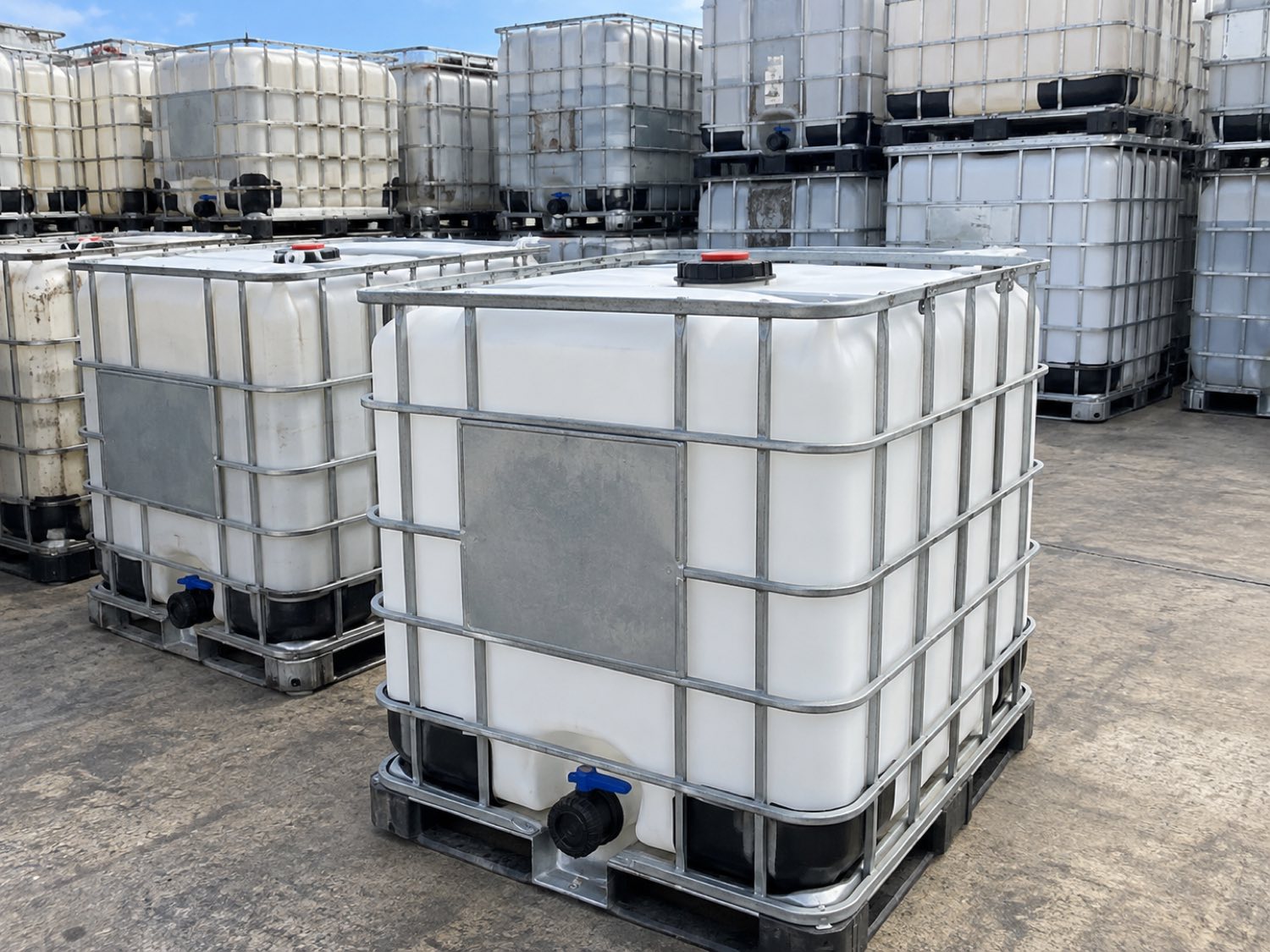
Tell us what you need
Buying, selling, washing, shipping or recycling: one form covers all of it. A partner supplier in our network follows up.
What you can request
One form covers buying, selling and disposal. Each request goes to partner suppliers in our network, who quote and fulfill it.
- 01
Buy
Used, reconditioned, rebottled and new IBC totes, from a single unit to larger orders, through partner suppliers.
OPEN → - 02
Sell
Have empties on your dock? A partner supplier can make an offer and arrange pickup.
OPEN → - 03
Recondition
Washing, valve and gasket replacement and rebottling, carried out by partner suppliers.
OPEN → - 04
Ship
Delivery and pickup arranged by the partner supplier who quotes you.
OPEN → - 05
Recycle
Totes that cannot be reused can be recycled through partner suppliers.
OPEN →
Why reuse an IBC tote
Reusing a tote that is still sound avoids manufacturing a new one. A cleaned tote with a good bottle, valve and cage can go back into service for compatible products, and a rebottled tote reuses the cage and pallet with a new inner bottle.
When a tote can no longer be reused, its parts can be recycled where facilities accept them. The sustainability page explains the trade-offs without inflated numbers.
Product types
Each product page explains sizes, grades and what to ask a supplier before you buy.
- 01Used IBC totesGraded, washed or as-is, 275 and 330 gallon
- 02Rebottled IBC totesNew inner bottle in a reconditioned cage
- 03New IBC totesFor first-fill and the strictest applications
- 04Stainless steel IBCsLong-life tanks for demanding service
- 05Accessories and fittingsValves, adapters, lids and gaskets
- 06Rainwater harvesting kitsTotes and fittings for rain capture
Industries that use IBC totes
Different industries need different things from the same container. Pick yours to see what to ask for.
- CH
Chemical processing
UN-marked units, seal compatibility and documented prior contents.
OPEN → - FB
Food and beverage
Rebottled and new units, with documentation confirmed by the supplier.
OPEN → - AG
Agriculture and growers
Irrigation, fertilizer handling and rain capture.
OPEN → - WT
Water treatment
Matching gasket and valve materials to the chemical.
OPEN → - BD
Breweries and distilleries
Stainless and poly totes for process liquids.
OPEN →
Common questions
Are used IBC totes safe to reuse?
They can be, when the grade matches the job. A used tote should be emptied, identified by its last content, cleaned or rebottled for its next use, checked for leaks and graded. Ask the partner supplier who quotes you for the last-content record and grade, and never put a tote into food or potable-water service without documentation that supports it.
How is a used IBC tote priced?
Pricing is by quote from partner suppliers. It depends on size, grade, whether the bottle is original or new, quantity, freight distance and current supply. Send one request and a partner supplier follows up with a quote.
Can I sell my used IBC totes?
Yes, through a partner supplier in our network. Use the form to tell us how many totes you have, their size, the last product they held and where they are. A partner supplier follows up with an offer or, for totes that cannot be reused, a recycling option.
Can totes be shipped to me?
Requests are accepted from across the United States. Delivery or pickup is arranged by the partner supplier who quotes you, and availability depends on partner suppliers near you.
What happens to a tote that cannot be reused?
A partner supplier can arrange recycling. The HDPE bottle and the steel cage are both recyclable where facilities accept them, and the pallet can often be reused or recycled. Ask for the recycling route when you request a quote.
Everything you can request, on one line each
Products and services available through partner suppliers in our network. Pricing is by quote from partner suppliers.
| What | Type | Good for |
|---|---|---|
| Used IBC totes | Product | Water, site use and technical duties where history is documented |
| Rebottled IBC totes | Product | A new inner bottle in a reconditioned cage |
| New IBC totes | Product | First-fill traceability |
| Stainless steel IBCs | Product | Heat, solvents and long service life |
| Accessories and fittings | Product | Valves, adapters, lids and covers |
| Rainwater harvesting tanks | Product | Gardens, growers and rain capture |
| Replacement parts | Product | Keeping a sound cage in service |
| Sell your IBC totes | Service | Empties you no longer need |
| Reconditioning and washing | Service | Returning your own totes to service |
| Freight and logistics | Service | Delivery and pickup |
| Recycling and disposal | Service | Totes that cannot be reused |
How a request works
IBC Totes Pro is a referral service. Partner suppliers in our network quote and fulfil.
- 01
Describe the liquid, not a product code
What decides the specification is the liquid, its weight, whether it touches food, and where it ships.
- 02
Send a free, no-obligation request
Add the quantity, your ZIP code, and whether you are buying, selling or recycling.
- 03
Partner suppliers receive it
Your request goes to partner suppliers in our network who can serve it.
- 04
A partner supplier follows up
They confirm grade, availability, price, freight and timing directly with you.
- 05
Inspect on receipt
Check the cage, bottle, valve and markings against what was quoted, and raise any issue with the supplier.
Two ways to buy bulk containers
The reuse-first way
- +Specify each unit to its own duty rather than the strictest one in the order.
- +Choose reconditioned where it suits the job; buy new where first-fill traceability is needed.
- +Rebottle sound cages instead of replacing whole units.
- +Combine a delivery with a collection of empties where possible.
- +Sell retired units rather than paying to dispose of them.
The default way
- −One specification across the whole order, set by the strictest duty in it.
- −Buy new by habit.
- −Scrap the whole tote when the bottle is tired.
- −Arrange delivery and waste removal as separate trips.
- −Pay for disposal of totes that could have been resold.
Questions before you send a request
Do I have to know exactly what I need?
No. Tell us the liquid, roughly how much and where it is going. The partner supplier who follows up can help work out the specification.
Can I request one tote?
Yes. On a single unit, freight can be a large share of the total, so mention whether you can collect.
Is IBC Totes Pro the seller?
No. IBC Totes Pro is a referral service. Partner suppliers in our network quote, supply, buy and collect totes, and set their own prices and terms.
Is there a catch with used containers?
The grade has to be honest and the history documented. Ask the supplier for prior contents in writing and read grades explained.
More questions people ask before sending a request
What is the smallest request accepted?
One tote. Partner suppliers set their own minimums for delivery or collection, so include your quantity and ZIP code.
Is there a catalogue?
No. Stock with partner suppliers changes, so a request describing the liquid and quantity gets a quote against what is available.
Can I see what I am buying?
Ask in your request; many suppliers can send photos of the actual units.
Which areas are covered?
Requests are accepted from across the United States; availability depends on partner suppliers. See coverage.
Who do I pay?
The partner supplier who quotes you. They set prices, payment, delivery and returns.
Is there a phone number?
No. Requests go through the quote form, which gives the partner supplier a written record of what you need.
Can I sell totes as well as buy them?
Yes. Partner suppliers buy empties; what they offer depends on documentation, condition, quantity and access. See sell your totes.
Can totes we already own be washed?
Partner suppliers can quote on reconditioning and washing, from a rinse to a rebottle with a new inner bottle.
What about hazardous residues?
Say what the totes held. Residues must go through a proper disposal route; the partner supplier will tell you what applies. Check current regulations.
Reuse first. Recycle when a tote is done.
Tell us the liquid, the quantity and your ZIP code. A partner supplier in our network follows up.
Grade decoder
Every grade, explained
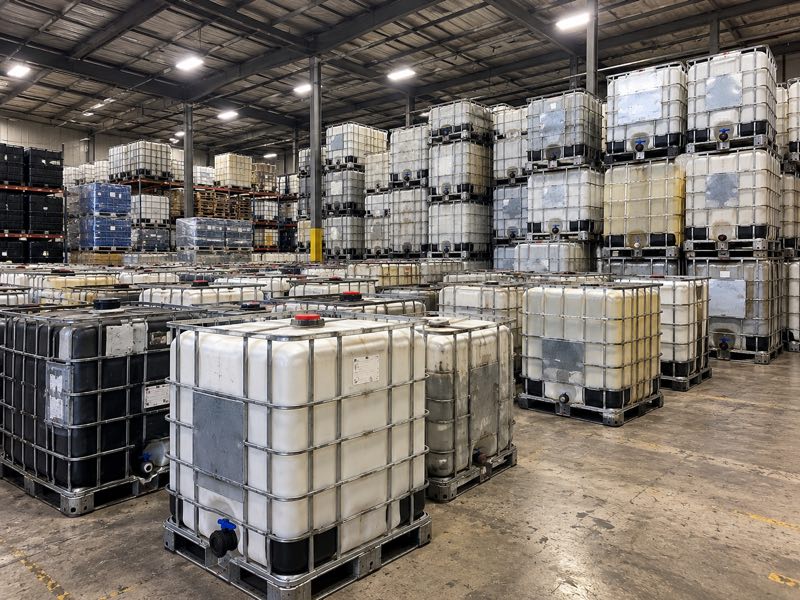
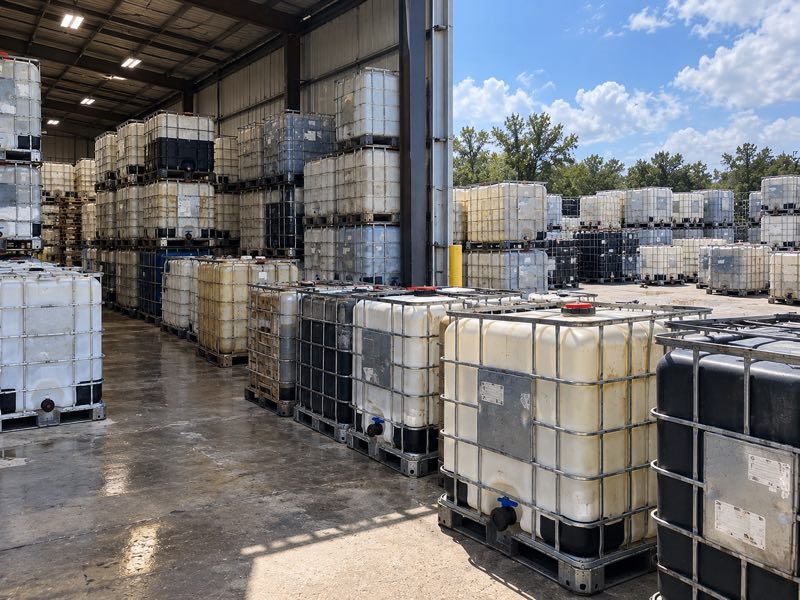
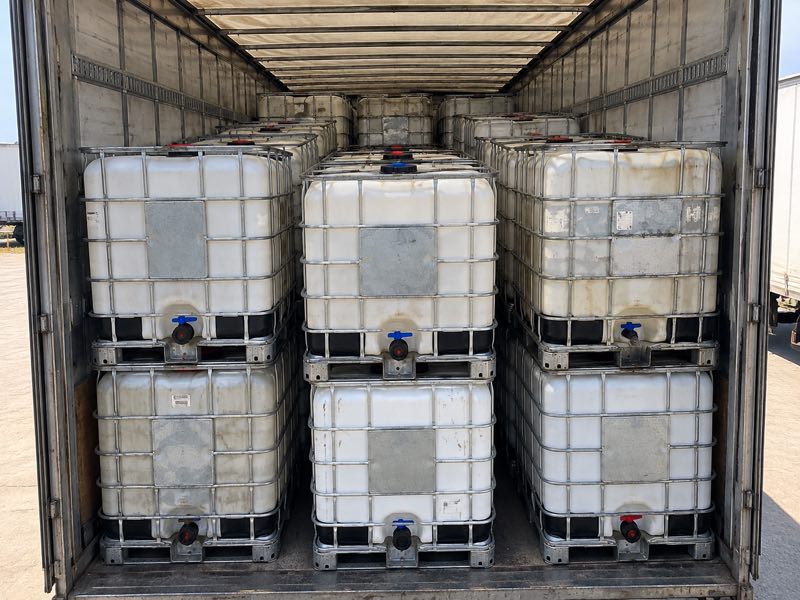
“Used” means nothing on its own. Tap a grade to see what it usually describes, what it is good for, and what it should not be used for.
Grade A, food-grade or rebottled
Usually a new HDPE bottle fitted into a reconditioned cage and pallet, or a bottle that only ever held an edible product and has been cleaned for food service.
Ask the supplier for the bottle date, the content history and any food-contact documentation before you buy.
BEST FOR
- ✳Edible oils, syrups, brines
- ✳Winery and brewery transfers
- ✳Cosmetic and nutraceutical blending
A bottle that has held a solvent, pesticide or other chemical should never be sold as food grade.
Grades are not an industry standard, and partner suppliers may describe them differently. See IBC tote grades explained.
Size chart
The size and spec library
Most buying mistakes are dimensional, not chemical: a 330 gallon tote that will not clear a 48-inch doorway, a gross weight that outruns the pallet jack, a wooden pallet in a clean room. Our master size chart carries footprints, gross weights, stacking limits, pallet types and thread sizes for common units, plus deep-dive articles for each size.
- 275 gallon (1000 L) — 48 × 40 × 46 in, the default in North America
- 330 gallon (1250 L) — same footprint, 7 inches taller
- 120 & 180 gallon — for tight cells and small batches
- 550 gallon and up — steel skids and forklift-only handling
Guides
Practical guides to buying, using and selling IBC totes
- 01IBC tote grades explainedWhat A, B and C really mean
- 02Food-grade vs technical gradeThe paperwork that separates them
- 03Rebottled vs reconditionedTwo words, very different totes
- 04How to clean an IBC toteTriple rinse, caustic, CIP — step by step
- 05IBC tote vs 55-gallon drumFootprint, handling and reuse compared
- 06How to sell used IBC totesWhat affects an offer for your empties